

We’d love to hear from you — whether you have a project in mind, or just want to say hello.
hello@awayo.co
.svg)
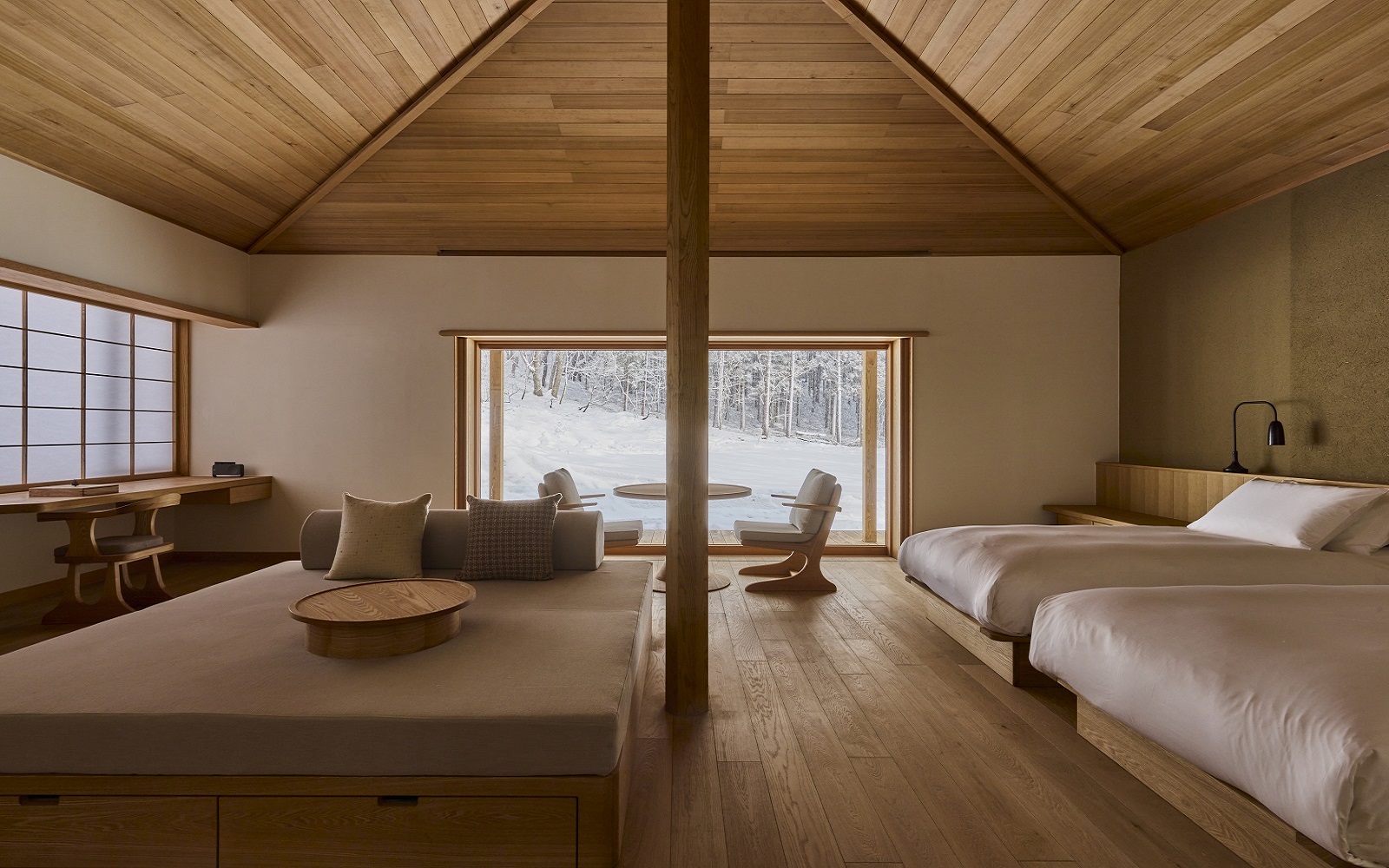
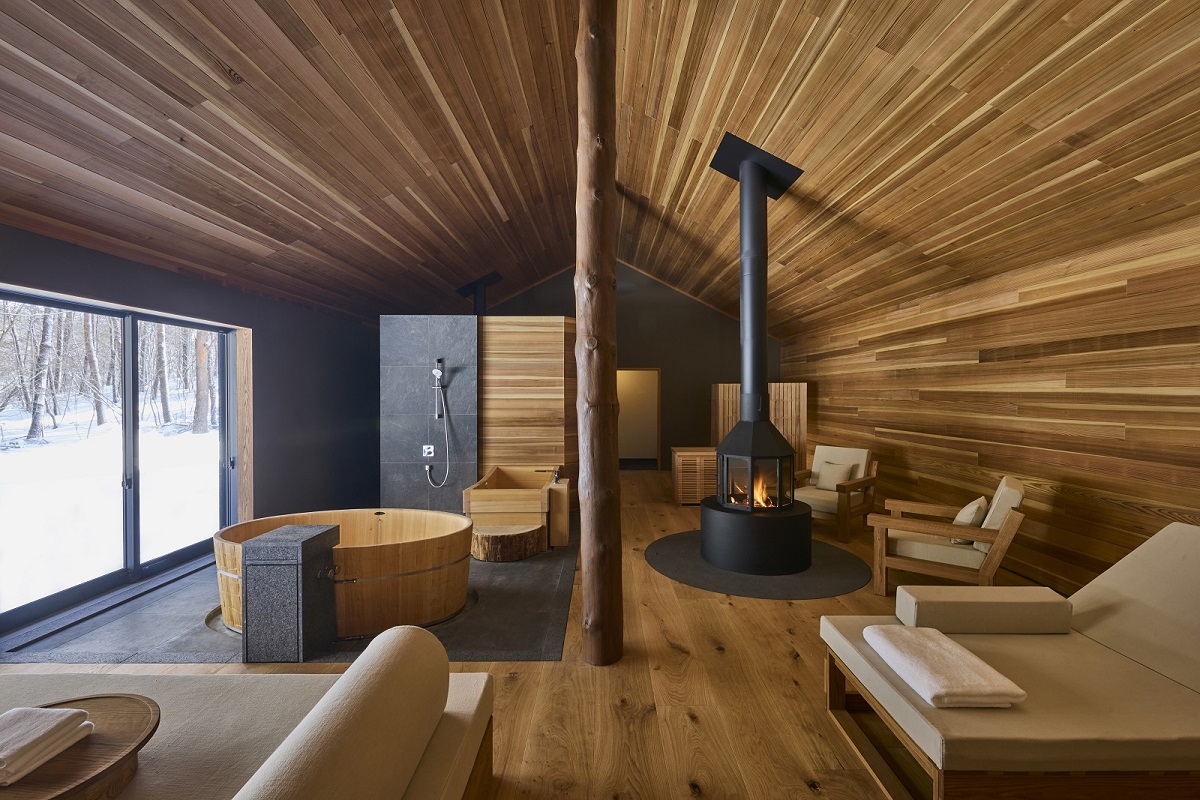
On 23 April 2026, Azuma Farm Koiwai opens in Shizukuishi, Iwate Prefecture, northern Japan. It is a boutique resort of just 24 villa-style rooms on an eight-hectare section of the historic 130-year-old Koiwai Farm, at the foot of Mount Iwate. It is the debut of the Azuma Farm brand — a new hospitality concept created by Azumi Japan in collaboration with East Japan Railway Company (JR East) and guided by Adrian Zecha as Co-Founder and Chairman.
The concept is called Farm Life. And the reason it matters — for luxury hospitality globally, for the outdoor and retreat sector specifically, and for what AWAYO® is building — is worth reading carefully.
Koiwai Farm was founded more than 130 years ago on once-barren volcanic land in Iwate Prefecture, northeastern Japan. Through generations of careful stewardship, it has been transformed into one of Japan's most lush and diverse agricultural landscapes — 3,000 hectares of pasture, forest, and farmland regarded as a model of coexistence between people and nature.
Azuma Farm Koiwai occupies an eight-hectare section of this landscape, surrounded by trees and offering sweeping views of Mount Iwate. The property was designed by Shiro Miura of Kyoto-based firm Rokkaku-ya, known for a contemporary teahouse-inspired sukiya style that draws on centuries of Japanese craft tradition. The materials used throughout the property were sourced directly from Koiwai itself: red pine and cypress felled from the farm's own forests, shaped by local artisans, arranged to echo the surrounding landscape rather than compete with it.
The accommodation comprises 24 villa-style guestrooms with intricate wooden interiors, each designed to dissolve into the surrounding forest rather than assert itself against it. Beyond the rooms, the resort features three 89 square metre sauna pavilions — each containing a wood-fired sauna, a cold bath, relaxation chairs around a fireplace, and daybeds — designed to extend the outdoor experience into the daily rhythm of the stay.
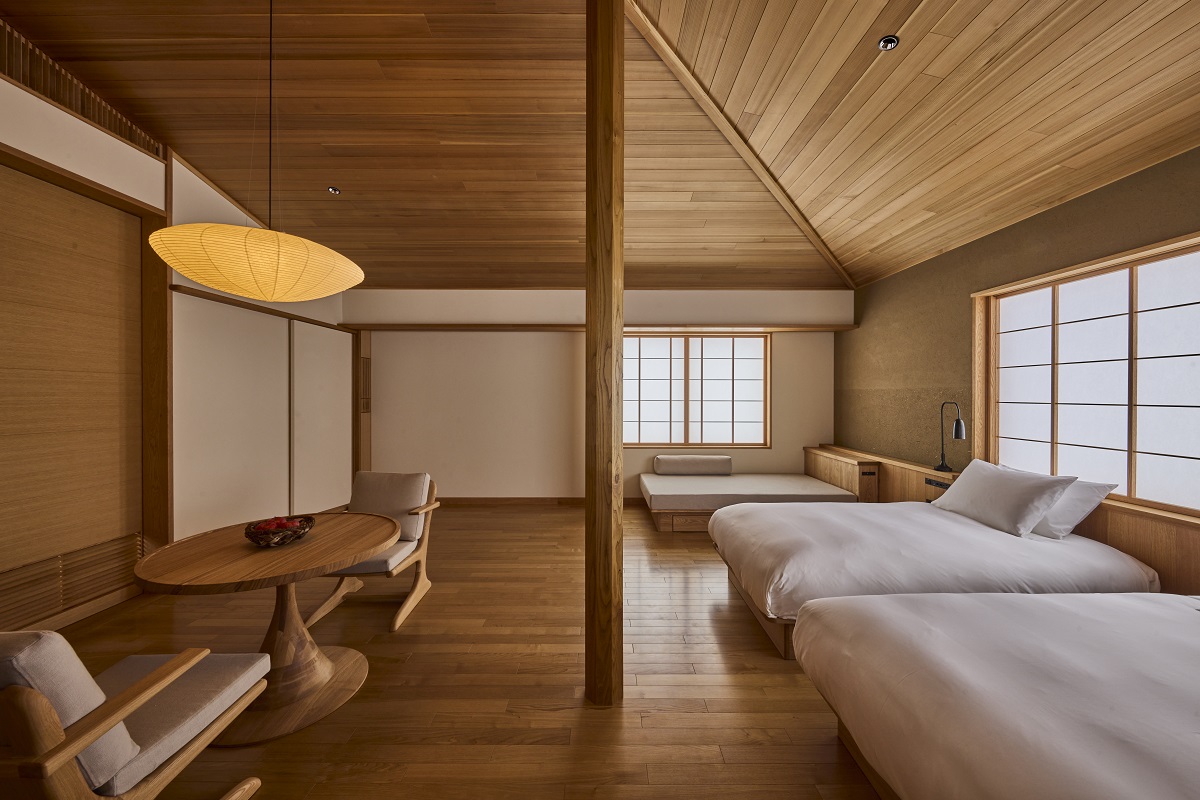
The Azuma Farm brand is built around a philosophy that the team calls Farm Life — a way of living centred on harmony with land, seasons, food, and community. This philosophy is not a marketing position. It is the structural logic from which every design decision, every culinary decision, and every guest experience at the property is derived.
Dining at Azuma Farm Koiwai is farm-to-table in the most literal sense: ingredients are sourced from the surrounding farms, mountains, and the nearby Sanriku coastline, reflecting the circular food culture that has shaped the Iwate region for generations. Menus change with the seasons. The kitchen does not import what it cannot find locally.
Rather than framing nature as a backdrop, the resort is designed so that the landscape itself forms the basis of each stay — from the soil and forests to the fire and wind of the surrounding mountains.
The experiences programme is built around the living traditions of Iwate rather than imported wellness offerings. Guests can join the Nanbu Tekki craft tour, visiting the workshop of Koizumi Nizaemon — an 11th-generation master kettle smith whose lineage dates to 1659. Nanbu ironware has been produced in Iwate since the Edo period, developing in close connection with Japan's tea ceremony culture. Guests can handle the iron, learn the casting tradition, and commission a custom iron kettle — a process that takes two to three months to complete and results in an object that carries the memory of the place long after the guest has left.
Equine experiences take guests on horseback through the Ainosawa pastures near Koiwai Farm, with Mount Iwate in view — connecting visitors with a horse-breeding tradition that has defined the region for centuries. Lacquer craft tours explore the Joboji Urushi tradition, whose techniques have been used in the restoration of some of Japan's most sacred temples. The property also serves as a gateway to the wider Tohoku region, with curated multi-destination journeys designed around the diversity of northeastern Japan: the ancient towns of Tono and Hachimantai, the coastal landscapes of the Sanriku, the regional artisans and culinary traditions of one of Japan's most historically rich and least internationally known regions.
Adrian Zecha founded Aman Resorts in 1988 with a property in Thailand — Amanpuri — that introduced a concept so radical and so precisely executed that it created a new category of hospitality and attracted a loyal community of guests who have been returning to Aman properties across Asia, Europe, and the Americas for nearly four decades. The category Aman invented was not glamping, not wellness, not eco-tourism. It was silence as luxury. Absence as product. The hotel that achieved its effect not through addition but through subtraction — no sprawling resort facilities, no entertainment programmes, no spectacle. Just a beautiful place, beautifully done, that left the guest alone with the landscape.
That instinct — that the most valuable thing a hotel can offer is not what it provides but what it creates the conditions for — defined the brand and has been imitated by virtually every serious boutique hospitality concept since. Aman's influence on the language of luxury hospitality is immeasurable.
What Aman did in the 1980s was radical: subtract the hotel from the experience and leave only the place. What Azuma Farm does is take that logic one step further — and make the guest not just a resident of the place, but a participant in it.
Azuma Farm Koiwai is, in this context, not a departure from what Zecha built at Aman. It is the next evolution of the same underlying conviction. Aman said: the building should defer to the landscape. Azuma Farm says: the guest should participate in the landscape. The step from witnessing to participating — from a beautiful room with a beautiful view, to a stay organised around the seasonal rhythms of a 130-year-old working farm — is the step that defines where luxury hospitality is going.
The fact that Zecha is making this step at 93, with the same creative energy and the same quality of execution that defined Aman, is not incidental. It is a statement about the direction of travel. When the person who created the most influential luxury hotel brand of the last half century starts a new brand rooted in agricultural heritage, craft, and seasonal living — not in spite of what he built before, but as its logical continuation — the market should pay attention.
Azuma Farm Koiwai is a property in Japan, designed for a specific landscape, by a specific team, with a specific cultural logic that is deeply Japanese. It is not a template to copy. But it carries three signals that are directly relevant to anyone building outdoor or retreat hospitality anywhere in the world.
Signal 1 — Regenerative over restorative. The guest is no longer primarily looking for rest. They are looking for reconnection — to land, to craft, to seasonal rhythm, to ways of living that the urban world has made invisible. Properties that give guests access to a living landscape — a working farm, a traditional craft, a horse-riding tradition, a forest managed by the same family for generations — will occupy a fundamentally different position in the market from properties that offer a beautiful view and a spa menu. Azuma Farm Koiwai is the most precisely executed example of this shift available.
Signal 2 — Small is not a constraint. It is the product. 24 rooms on eight hectares of a 3,000 hectare farm. The property is tiny. The farm is vast. The smallness of the resort is not a limitation on the experience — it is the reason the experience is possible. A guest stays in 24 rooms or 240 rooms changes everything about what a farm stay can be. Azuma Farm is small precisely because Farm Life requires intimacy, slowness, and genuine integration with the land. This is a design decision, not a budget decision.
Signal 3 — The craft is the culture. The 11th-generation kettle smith. The lacquer tradition that restores Japan's sacred temples. The horse-breeding culture that has defined Iwate for centuries. These experiences cannot be invented, imported, or manufactured. They exist because people have been doing them, in the same place, across generations. The hospitality concepts that will define the next decade are the ones built around things that cannot be copied — because they are the living expression of a specific place at a specific time, carried by specific people whose knowledge cannot be transferred to a spreadsheet.
Azuma Farm Koiwai is not a competitor and not a blueprint. The cultural context is Japanese, the scale is intimate, the partner is one of Japan's largest railway companies. The specific product that Azumi Japan and JR East are building in Iwate is unrepeatable outside the landscape that made it possible.
But the conviction behind it — that the most powerful luxury product is the one most deeply rooted in a specific place, a specific season, and a specific set of living traditions — is the same conviction that drives every project AWAYO® develops. The Austrian alpine farm with its three generations of culinary knowledge. The lakeside forest with its sauna ritual and its morning mist. The cabin that sits on the land without disrupting it, and through whose window the guest sees exactly what they came for.
What Zecha is demonstrating, 38 years after he founded Aman, is that the instinct he had in 1988 was right — and that the world has caught up to it so completely that the next version of it is not more luxury, but more land. Not more amenities, but more seasons. Not more design, but more depth.
The outdoor hospitality market is not moving toward generic comfort. It is moving toward specific meaning. Azuma Farm Koiwai is the clearest possible demonstration of where that movement leads when it is executed with full conviction, full resources, and 93 years of accumulated understanding of what guests are really looking for when they leave the city.
AT A GLANCE
Property: Azuma Farm Koiwai
Brand: Azuma Farm by Azumi Japan
Partners: Azumi Japan · East Japan Railway Company (JR East)
Creative Director: Adrian Zecha, Co-Founder & Chairman
Architect: Shiro Miura, Rokkaku-ya, Kyoto
Location: Shizukuishi, Iwate Prefecture, Tohoku, Japan
Opening: 23 April 2026
Scale: 24 villa-style rooms · 8 hectares within a 3,000 hectare farm
Key features: 3 sauna pavilions (89 m² each) · farm-to-table dining · craft experiences · equine programme
Access: Tokyo → Morioka via Tohoku Shinkansen (~2 hrs) + shuttle
Positioning: Ultra-boutique regenerative farm resort
Philosophy: Farm Life — harmony with land, seasons, food, and community