

We’d love to hear from you — whether you have a project in mind, or just want to say hello.
hello@awayo.co
.svg)
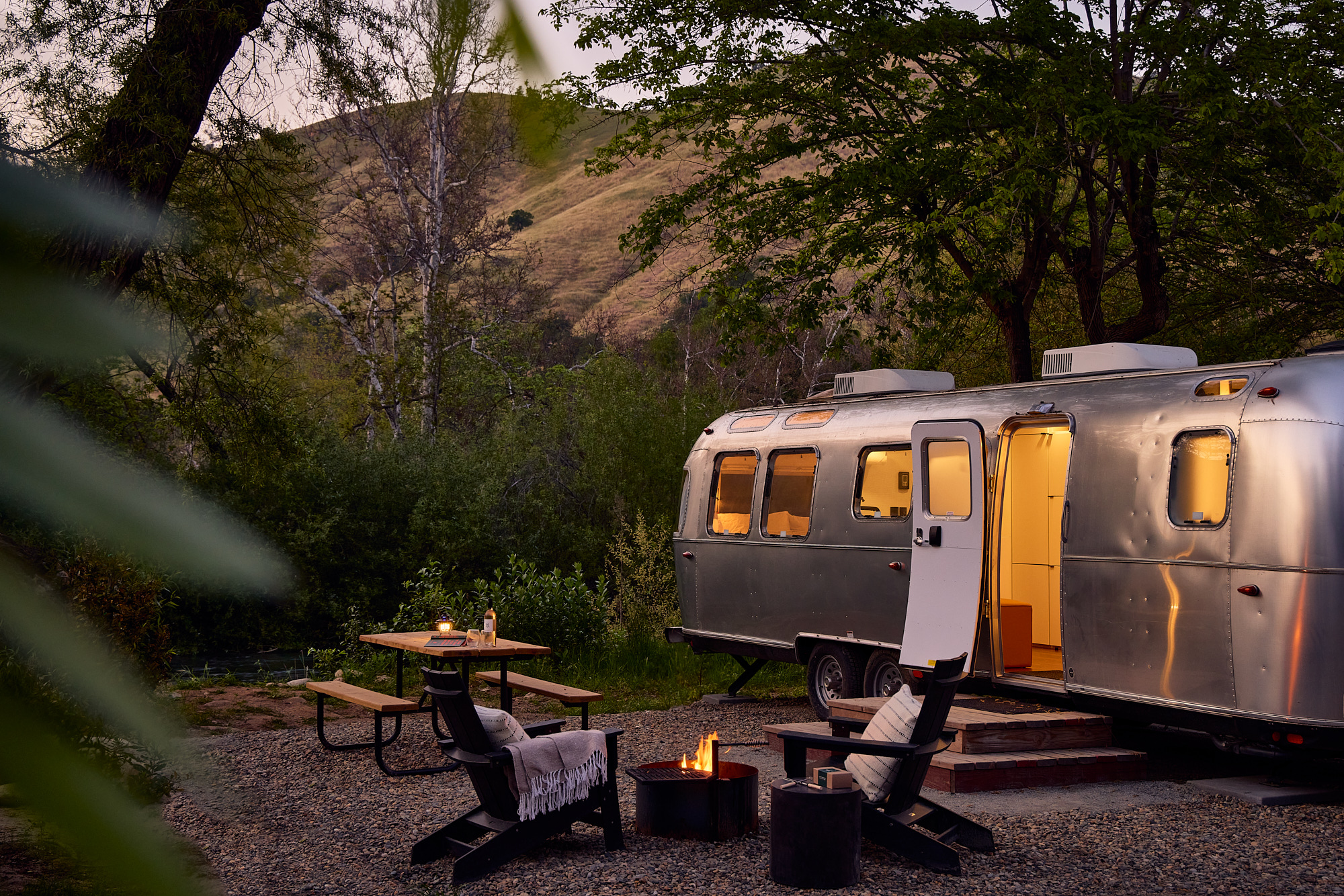
In 2012, Neil Dipaola was a real estate developer. He was building student and multifamily housing — practical, scalable, institutional-grade. He was good at it. But he was also watching Airbnb start to change consumer expectations around where people could stay and what a stay could feel like. And in that shift, somewhere in the gap between the inconsistency of peer-to-peer rentals and the predictability of a conventional hotel, he saw something.
Dipaola bought a campground in Santa Barbara, California. He went on Craigslist. He found six old Airstream shells, renovated them, and placed them on the property. He was not thinking about building a brand. He was testing an idea: what if the outdoor experience could be delivered with the reliability and comfort of a boutique hotel? The answer was that people would pay a great deal of money for exactly that. AutoCamp had begun.
I noticed an inconsistency in the Airbnb product and became enamoured with the idea of Airstream's mid-century design aesthetic connected to the great American road trip. I was a real estate developer and it took off like wildfire. — Neil Dipaola, Founder & CEO
Dipaola and co-founder Ryan Miller opened a second, larger location in Sonoma County's Russian River Valley in 2016, inside a redwood grove with an architecturally designed clubhouse pavilion. By now the model was clear: custom Airstreams as the signature accommodation, a mid-century modern Clubhouse as the communal anchor, premium locations adjacent to nature destinations, and hotel-grade operations throughout.
In December 2018, Bob Wheeler — CEO of Airstream — called Dipaola directly. The result was a territorial exclusivity deal: AutoCamp became Airstream's exclusive lodging and hotel partner. One month later, in January 2019, AutoCamp announced $115 million in equity commitments from real estate private equity firm Whitman Peterson — with a follow-on provision that could double the investment capacity to $230 million, and a stated ambition to develop more than $500 million in projects.
Each Airstream is a factory-specified, custom-designed unit: hardwood floors, marble wet rooms, luxury bedding, bathrobes, USB charging, full climate control, and — critically — four-season performance. Airstreams are heated for winter stays, giving AutoCamp year-round operational capacity that platform tent competitors cannot match. Rates during peak season at properties like Yosemite and Zion can exceed $500 per night.
The Clubhouse is the second critical design element — architecturally commissioned at every location. At Russian River it is a pavilion set among the redwoods. At Yosemite a 4,000 square-foot mid-century modern structure with a specialty lighting installation. At Joshua Tree a twin Quonset hut. Each Clubhouse contains food and beverage service, a General Store stocked with locally curated products sourced within 100 miles, and all front-of-house hospitality functions.
The service model is deliberately hybrid: hotel-grade in execution, camping-ethos in spirit. No bellhops. Guests haul luggage in iconic red Radio Flyer wagons. Fresh-squeezed orange juice available — but guests squeeze it themselves. This preserves the sense of agency and informality that is the emotional appeal of camping, while removing the discomfort that prevents mainstream consumers from engaging with it.
One of the most revealing data points: 70% of women have negative associations with camping. And 70% of AutoCamp guests are women. The product was explicitly designed to close that gap — to serve the guest who loves the idea of the outdoors but has been put off by the execution of camping as it has traditionally existed. Beyond gender, the guest profile spans young professionals and families from major adjacent metropolitan areas, active retirees, and corporate groups — Silicon Valley companies including Google, Netflix, and Uber have conducted full property buyouts for offsites.
In February 2024, Hilton announced an exclusive partnership with AutoCamp — the first time a major global hospitality brand and an outdoor lodging company had come together in this way. AutoCamp properties are bookable through Hilton.com and the Hilton Honors app. Members can earn and redeem points on stays. The partnership connects AutoCamp to Hilton's tens of millions of loyalty members and gives the brand a direct booking channel that captures guests already planning a national park trip. Current portfolio: Russian River, Yosemite, Joshua Tree, Sequoia, Zion, Cape Cod, Catskills, Asheville, and Texas Hill Country.
All images are the property of their respective owners and are used for editorial and illustrative purposes only. Image rights belong to the featured brands and their designated photographers. AWAYO® makes no claim of ownership over third-party imagery.