

We’d love to hear from you — whether you have a project in mind, or just want to say hello.
hello@awayo.co
.svg)
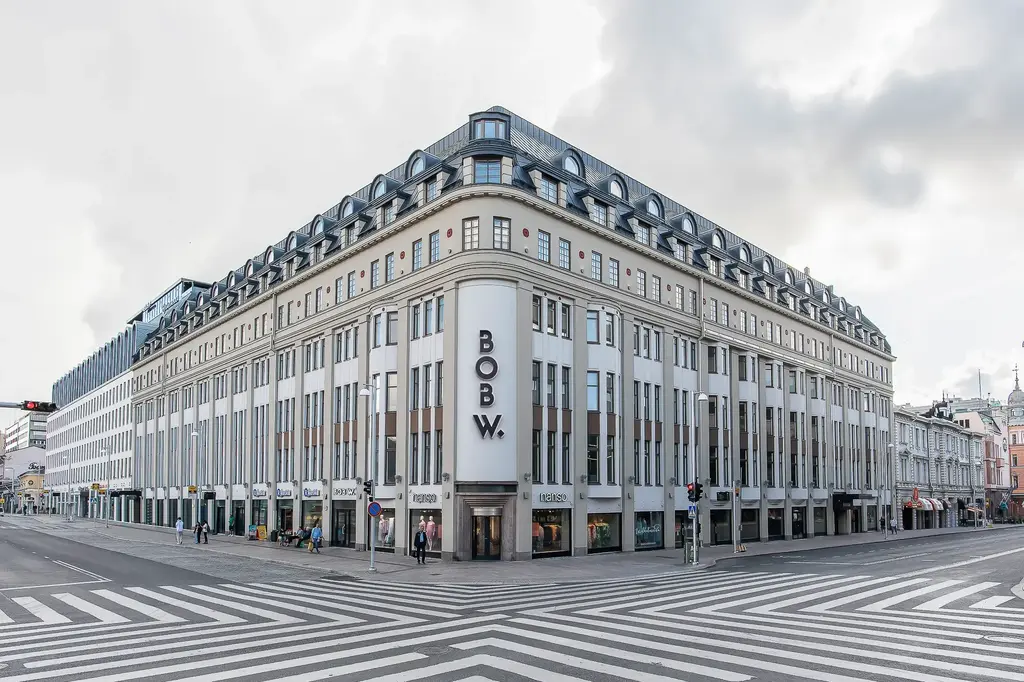
Something significant has shifted in European hospitality, and the operators leading that shift are not always the ones getting talked about first.
For the last five years, most of the category attention has gone to architectural greenfield projects — the striking new cabin in the forest, the Scandinavian lodge on the fjord, the ultra-designed micro-resort carved out of an untouched piece of land. These projects are beautiful. They photograph well. They win awards. And they also happen to be, in most cases, extraordinarily difficult and expensive to get built.
Meanwhile, a quieter and far more consequential movement has been unfolding in parallel. Across urban hospitality, the most successful operators of the last five years have not been building greenfield at all. They have been converting obsolete assets — office buildings, tired hotels, underperforming apartment blocks — into a new generation of branded, tech-enabled, full-service accommodation. The category has a name in the industry now: the conversion economy. And the brand that has defined it more clearly than any other is Bob W.
Understanding what Bob W has done matters for outdoor hospitality, because the same logic is about to come for the campgrounds, the ageing mountain hotels, the underperforming river resorts, and the tired rural inns across Europe. The conversion economy is not an urban phenomenon. It is an asset-class phenomenon. And outdoor hospitality is next.
The next decade of European hospitality will be defined less by new buildings than by what the winners do with the old ones.
In July 2024, Bob W announced a £400 million joint venture with OCIM — the investment arm of global developer Osborne+Co — to acquire and convert obsolete hotel and office assets across Europe into serviced apartments. In 2025 and 2026 they followed up with lease signings on conversion projects in Munich, Manchester, Milan and Belfast. Every one of these is a building that was originally constructed to do something else, now being repositioned into a modern full-service aparthotel operated under a single tech-driven brand.
This is not an incidental strategy. It is the centre of the model.
The reasoning is simple and it applies directly to outdoor hospitality. Greenfield development in European cities has become slow, permit-heavy and capital-intensive to the point of near-impossibility in many locations. At the same time, the post-Covid structural shift in office demand has left enormous quantities of functionally obsolete commercial space in central urban locations. For an operator with a proven brand, a proven operating platform and the right capital partners, this is the opportunity of a decade: take buildings that are already built, already permitted, already serviced, and already in the right location — and turn them into the product the market actually wants now.
The outdoor hospitality equivalent is already visible. Collection Rivages converting ageing French campgrounds into premium coastal resorts. Sandaya rolling up and upgrading legacy campsites across Southern Europe. Marvilla Parks doing the same. The Natterer See in Austria evolving a 95-year-old family campsite into one of Europe's best alpine hospitality businesses. In every case, the underlying move is identical to Bob W's: convert what exists into what the market now demands.
Bob W's brand name is a contraction of Best of Both Worlds, and the entire proposition rests on a structural insight that translates almost too neatly into outdoor hospitality.
Bob W argued that the short-stay rental market offered something hotels couldn't — space, a kitchen, the ability to live rather than visit — but lacked everything a branded hotel provided: consistency, service, trust, predictable quality. Hotels, on the other hand, offered reliability and brand comfort but couldn't match the utility of a real home. Bob W built its entire company on collapsing that trade-off into a single product: hotel-grade consistency plus apartment-level utility, delivered at scale.
Outdoor hospitality sits in front of the exact same structural tension.
On one side, there is the traditional hotel — reliable, serviced, branded, but fundamentally detached from the landscape. On the other, there is the short-term rental cabin or tent — authentic, immersive, private, but inconsistent, unbranded, and often operationally fragile. The entire market is waiting for the outdoor equivalent of Bob W's answer: a product that combines the intimacy and privacy of a private cabin in nature with the consistency, service layer and brand trust of a real hospitality operator.
That is what a well-built landscape hotel actually is. A private stand-alone structure with the utility of a home — kitchen, sauna, outdoor tub, your own piece of land — paired with the service layer of a hotel. Branded. Operated. Tech-enabled. Consistent from site to site. This is the outdoor Best of Both Worlds, and the operators who articulate it that clearly will capture a disproportionate share of guest demand in the next five years.
The cabin is not a hotel room. It is not a short-term rental. It is the hospitality category the guest has actually been asking for.
The single most underappreciated aspect of Bob W is how radically lean their operations are. The company launched two properties in Amsterdam totalling over 150 apartments with just four on-site employees. They operate over 3,000 serviced apartments across 29 European cities with a staff model that would be inconceivable for a traditional hotel chain.
This is not magic. It is infrastructure.
Bob W built proprietary apps for guests, cleaners and operations. They integrated IoT sensors for temperature, humidity and noise monitoring. They automated check-in, check-out, upsells, and most customer service interactions. They layered AI and chat-based concierge on top. The result is what Bob W calls "autonomous hospitality" — a model where the service quality is protected, but the per-unit operational overhead collapses.
For outdoor hospitality, this is the single most important translatable insight in the entire Bob W playbook.
Outdoor sites are structurally harder to staff than urban ones. They are remote. The labour pool is thinner. Seasonality distorts operations. A small landscape hotel in the Alps cannot afford a full concierge team year-round. But the guest still expects hotel-grade consistency. The only way to square that circle is to do what Bob W did in cities: build the technology stack that lets a small, trained team operate a distributed portfolio at hotel-grade service standards.
This is not a nice-to-have in outdoor hospitality in 2026. It is the difference between a scalable platform and a fragile one.
The fourth lesson from Bob W is less obvious but arguably the most strategic: the operating model is more portable than people assume.
Bob W's success has nothing to do with being in cities specifically. It has to do with a repeatable operating chassis — brand, tech, design system, direct booking, multi-unit density, proprietary guest layer — that can be applied anywhere the underlying asset logic makes sense. They started in Helsinki. They scaled into Copenhagen, Amsterdam, Milan, Manchester, Munich, Belfast. Each city has a different building stock, a different guest profile, a different seasonality. The chassis is the same.
Outdoor hospitality is heading toward the same reality. The operators who will own the category in 2030 are not site-by-site artisanal developers. They are platform builders. They have one design system. One booking engine. One app. One brand. One operational playbook. And they roll it across ten, twenty, fifty sites — coastal, alpine, forest, lakeside — without losing coherence.
The early evidence is everywhere. AutoCamp in the US across Airstream sites. Postcard Cabins across 29 locations. Onera expanding from a single site in Texas into a REIT-backed platform. Collection Rivages across five French coastal properties with more to come. The European outdoor operators who do not build an urban-grade operating chassis will be the ones acquired, not the ones acquiring.
The final and perhaps most important signal from the Bob W story is what it has done to capital markets.
Serviced apartments are now being described in institutional investor decks as "one of Europe's fastest-growing asset classes." The £400 million OCIM joint venture is specifically targeting conversion of obsolete assets. Real estate capital is repositioning toward operators who can combine brand, tech and operations into a single investable platform. The asset class has moved from curiosity to core allocation in under a decade.
The same revaluation is happening to outdoor hospitality. Onera was acquired by a public REIT. Postcard Cabins was acquired by Marriott. AutoCamp has raised institutional capital at scale. Clear Summit Investments is building a repositioning-led portfolio in the outdoor category. InfraVia backs Sandaya. The signals are consistent across the category: serious capital is moving in, and it is moving specifically toward operators who can run at platform scale with converted assets.
The implication for operators and developers is direct. If you are building outdoor hospitality today, the question is no longer whether capital is available. It is whether your operating chassis is capital-ready.
All images © Collection Rivages. Used here for editorial and commentary purposes. AWAYO® holds no rights to the visual material.