

We’d love to hear from you — whether you have a project in mind, or just want to say hello.
hello@awayo.co
.svg)
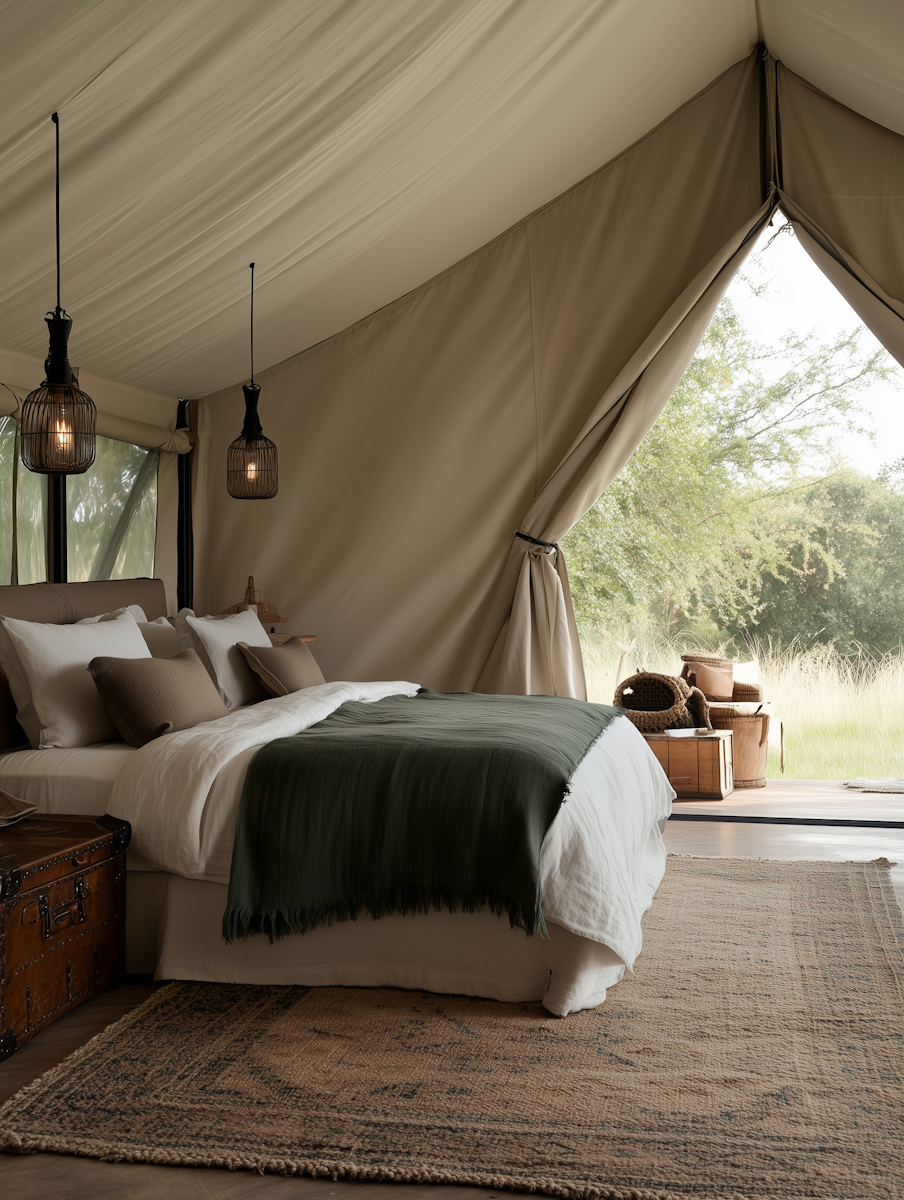
Not long ago, camping meant a tent, a sleeping bag, and making peace with discomfort. That era is over — and that's not a bad thing.
Over the past two decades, the concept of sleeping outdoors has undergone a quiet but remarkable transformation. Glamping — a blend of glamorous and camping — began as a niche curiosity in the early 2000s and has since evolved into one of the most dynamic segments in the global hospitality industry. The global glamping market is projected to reach $5.94 billion by 2030. Wellness tourism expenditures already hit $830 billion in 2023, rebounding from a pandemic low of $351 billion in 2020. And by 2027, the global wellness tourism market is expected to more than triple in size, reaching $1.4 trillion.
These are not the numbers of a trend. They are the numbers of a category finding its permanent place in the world.
Luxury camping is not a trend. It's a redefinition of hospitality for the 21st century — one where comfort is no longer confined to four hotel walls.
Glamping has a richer history than the term suggests. Evidence of lavishly equipped outdoor accommodations traces back to the 16th century, when French and Scottish nobility placed ornate tents on meadows close to the court. Comfort outdoors was always a statement of taste. The modern chapter began after the First World War, when people desperate for escape embraced glamping as an affordable form of retreat. Over the decades that followed, the format evolved from decorated tents to fully equipped pods, lodges, and chalets, eventually giving rise to what we now call cabin chic.
Cabin chic is the current apex of this evolution. It takes the soul of a rustic log cabin and fuses it with a modern design sensibility — open, airy interiors, contemporary furnishings, spa bathrooms, gourmet kitchens. These are not compromises between the outdoors and comfort. They are both at once. Accommodations positioned in breathtaking, private locations where guests can sit by a wood-burning fireplace, soak in a hot tub at sunset, or wake up to floor-to-ceiling views of a snow-covered forest — without giving anything up.
The future of hospitality is modular, mobile, and deeply connected to the land it sits on. The question is no longer if — it's how you get there.
Several forces are converging to make this moment possible. Modern travelers are searching for experiences that feel genuinely different — and luxury retreats deliver an unusual combination of adventure and comfort that no conventional hotel can replicate. Technology has removed the last remaining barriers: solar power, portable water filtration, and satellite internet now bring the full comforts of home to the most remote and beautiful corners of the world.
A growing emphasis on sustainability means that eco-conscious design is no longer a nice-to-have — it's an expectation, especially among the millennials and Gen Z travelers who now dominate the market and are willing to pay a premium for travel that aligns with their values. Social media has amplified all of this. Picturesque retreats surrounded by nature have become some of the most sought-after content on the internet — drawing a style-conscious, experience-hungry demographic that wants their next trip to be worth sharing.
For operators, landowners, and hospitality brands paying attention, the message is clear. Retreats are not a niche offering for outdoor enthusiasts. They are the new frontier of hospitality — a category challenging traditional hotels on their own terms, because they offer something no city hotel can: a direct, unfiltered connection to a place.